About
I've sat on almost every
side of the problem.
I've been the person living with the process, the person trying to sell the promise, the person listening to customers, and the person deciding what gets built.
Those perspectives rarely agree.
I've found that useful.
01 · Operations & Customer
Operations & Customer
I started my career close to the frontline, working in ground operations while also being part of the customer-facing side of the airline experience.
I dealt with the things customers actually felt: disruptions, delays, service issues and the moments when what was planned didn't match what was happening on the ground.
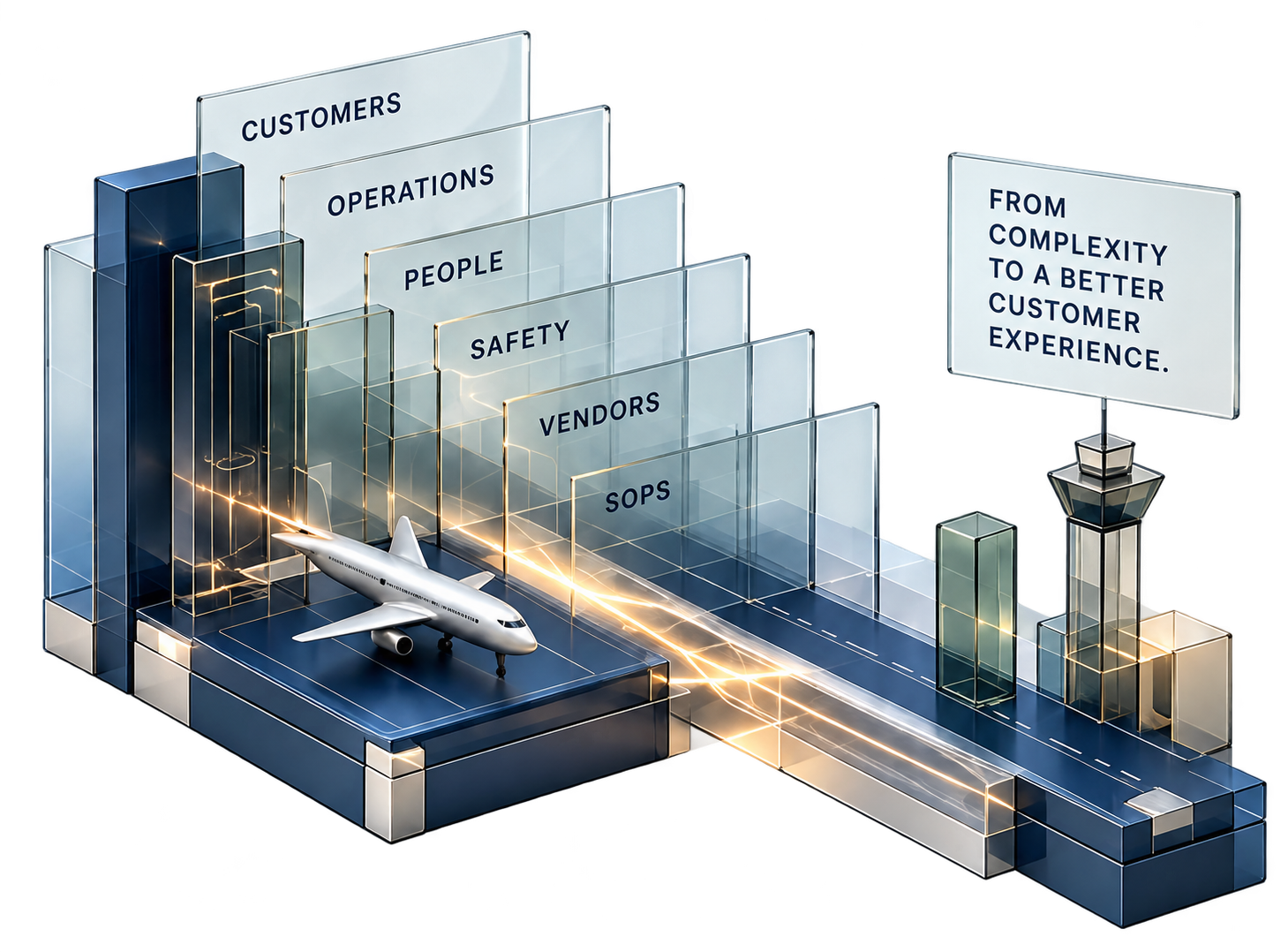
At the same time, I had to work with SOPs, different operational teams, vendors and safety requirements to get things moving again.
You can't solve a customer problem properly without understanding the system creating it.
I have a habit of picking up
things nobody owns yet.
That's probably the simplest explanation for how my career has developed.
The next opportunity has often appeared in the gap between functions. It might not quite belong to anyone yet, but it still needs someone to make it move.
I tend to pick it up.
The promotions came afterwards, as the scope grew.
What I bring
- Operational reality
Understand what happens after strategy leaves the slide.
- Commercial thinking
Care whether the idea creates real value.
- Customer perspective
Understand the problem from the person's side.
- Product judgement
Decide what matters, what doesn't, and what to learn next.
- Leadership
Create clarity and ownership without becoming the bottleneck.
None of these perspectives tells the whole story.
That's probably why I've never been very good at fitting neatly into one title.
And I'm okay with that.